
Château de Riviera
Great Falls, VA
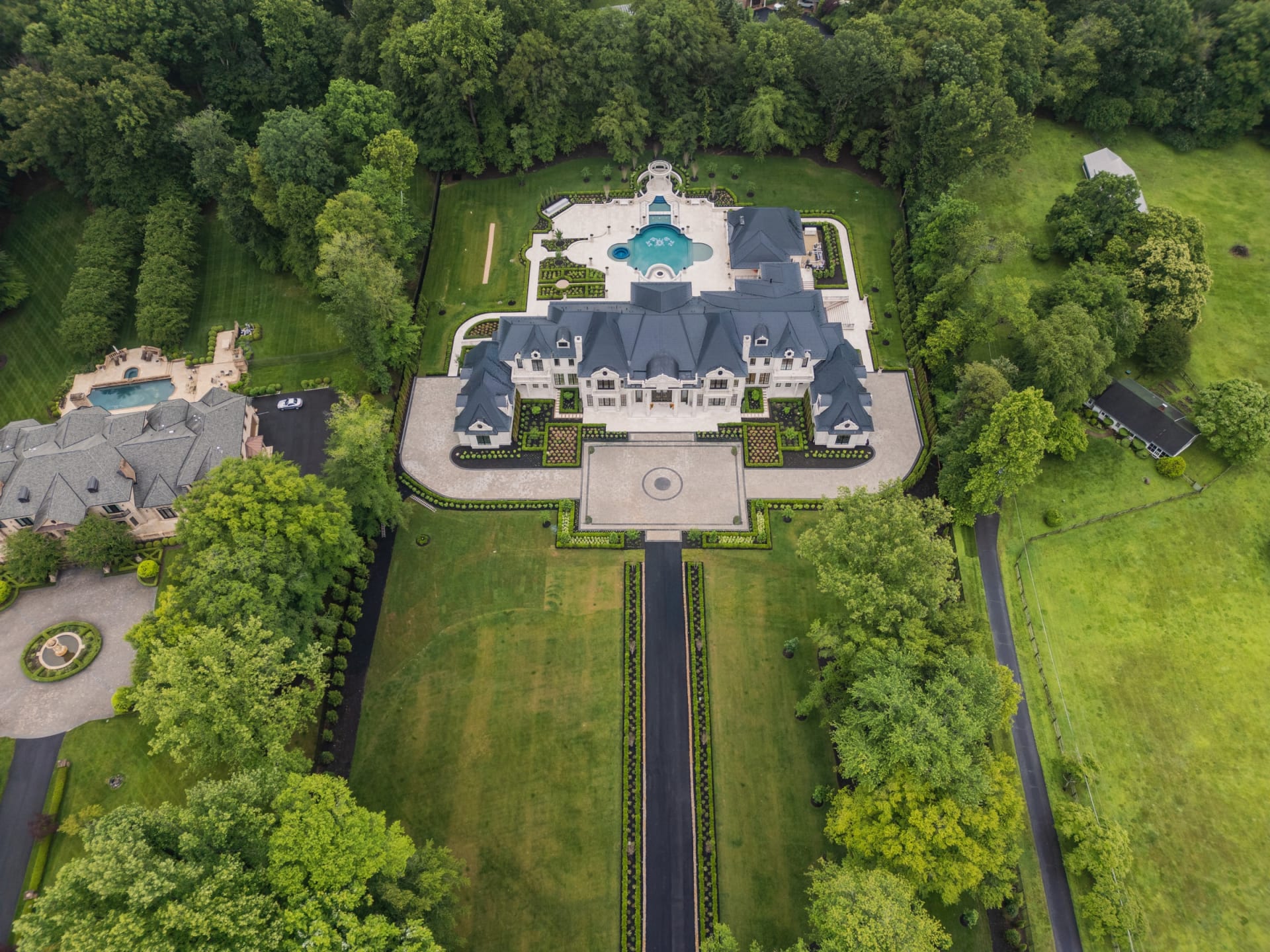
Pictured: Château de Rêve · Great Falls, Virginia
Fairfax County
Great Falls is where we have built some of our largest work: Château de Riviera, Château de Rêve and Château de Lune are all here, and so is the drive and planting at Château de Lumière. We design and build terraces, pavilions, pools, planting and lighting on lots that rarely sit flat. Every project is drawn by our lead designer, and one firm builds it.
Your first visit is complimentary.
A real person answers your call, day or evening. We’ll set up a first conversation and a walk of your property with our lead designer.
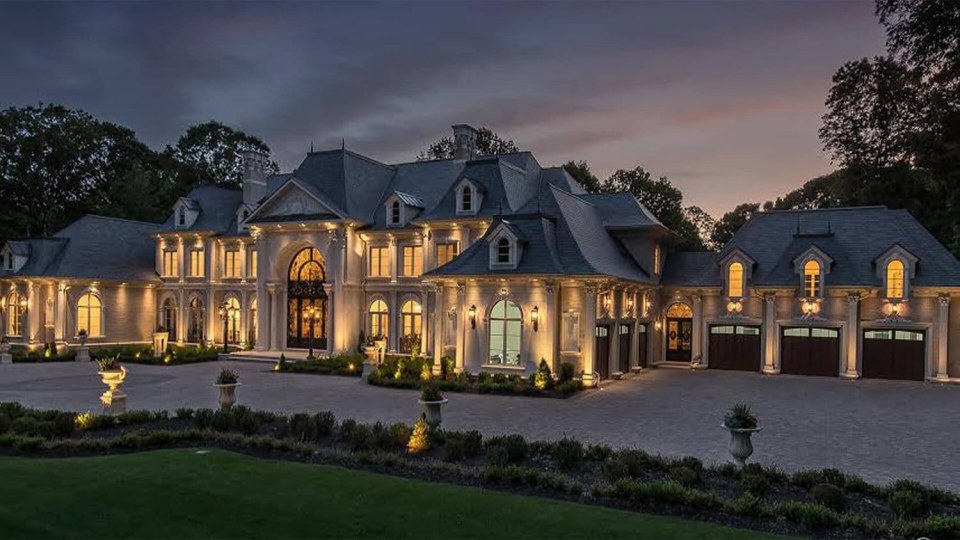
Great Falls, VA
A wrap-around brick drive, custom entry stairs and new planting across the front of the estate.
Great Falls is in Fairfax County. On larger, wooded lots, these are the rules that come up first.
Where a house runs on a septic system, the County advises against paving over the drainfield or driving heavy equipment across it, and the lines are often close to the surface. We locate the drainfield before we place a terrace or a pool, and we plan the construction access around it too.
Sources: Fairfax County, you and your land · Fairfax County Health Department, sewage and water
Land close to certain streams is a Resource Protection Area. A pool, shed or gazebo can't go in that buffer without an exception approved after a public hearing, and a patio there goes through the same process. We check the County's map for your address before the first drawing.
Sources: Fairfax County, Resource Protection Areas FAQ · Fairfax County, living near a stream
Past a set area of disturbed ground, the County needs an approved grading plan before work starts, and that same line brings in its stormwater requirements. On a sloping lot the area adds up quickly, so we plan the grading early and prepare the plan with our civil partners.
Sources: Fairfax County, infill lot grading plans · Fairfax County, stormwater on infill lots
The County sets how close a freestanding structure can be to your property lines by its height, and larger ones need a building permit. We settle the pavilion's height and position together, so the design and the permit agree from the start.
Sources: Fairfax County, freestanding accessory structures · Fairfax County, zoning FAQ
When a project falls under the County's tree conservation rules, keeping healthy existing trees comes before new planting counts toward the canopy. We design around the ones worth keeping.
From a garden patio to a complete estate, designed as one plan and built by one firm.
Terraces, pavilions, kitchens and fire: rooms outside that feel like part of the house.
Gardens planted to grow more beautiful each year, and cared for long after we finish.
Pools, spas and water features, designed around the way you live outside.
“Paulo came in, listened to really what we were trying to accomplish.”The Nantucket Residence · Potomac, Maryland
Your first visit is complimentary.
Or call 703.771.1003
A real person answers your call, day or evening. We’ll set up a first conversation and a walk of your property with our lead designer.

